Posts

Showing posts with the label imperial

The absurdity of the use of kph

Image
  First and foremost I apologise (yet again) for such a long gap in between blog posts. The return of freedom over the past year has kept me away from screens. They say it takes 66 days to develop a new habit. Running is a habit I developed over lockdown, but the return to the office (and I intend to never work from home again) and frequenting the pub has reduced frequency of this.  It is, however, not completely bleak for my physical well-being. Cramming a number of social events in after work has led to me doing a lot more walking around central London. I don’t have an Apple Watch, (other brands of smart watch exist), but my iPhone records my steps and a lot of really interesting data on my walking and running. As would be no surprise, I’ve configured everything in metric units. Thankfully, gone are the days where Apple would dictate to you , based on your location, the units of measurement you use. You have a chose whether to specify distances in miles or kilometres....

The problem with dual labelling liquids

Image
I was recently looking at double-walled coffee cups - thrilling, I know!  The specific gift request was for "double-walled coffee cups - large". By large, I took it to be at least 500 ml.  Double walled coffee cups are hard to find, but I did find some in the end from Argos. They had a stated volume of 350ml or 12 fluid ounces. Few people in this day and age in Britain know what an imperial fluid ounce is, and rightfully so. With the exception of draught beer and cider, and milk in returnable containers, liquids are sold in metric units and have been more and more since the late 1970s.  It therefore follows that drinking vessels (with some exceptions) should, when sold, mention only metric volumes. So for these coffee cups, there should not need to be any mention of it being 12 fluid ounces.  Whilst dual labelling is a bit cumbersome, it is not the end of the world. After all, priority was given to the metric units and it is probably a helpful step for the older gene...

The complex relationship between aviation and measurement

Image
“It’s a bird. It’s a plane. It’s... more confusion”  The aviation industry is one which holds a special place in my heart, but I won’t bore you with this soppy nonsense. The measurement muddle is truly alive in this industry, so much so, that it makes measurements in Britain seem coherent. Yet still, one of the few global industries manages to work in the midst of a monstrous measurement muddle. Whilst the language of aviation is standardised to English, there is no such standardisation for units of measurement. Metres, geographical miles, nautical miles, inches of mercury, millibars, knots, metres per second are some of the measurements you are likely to come across if you’re ever in the cockpit.  Let’s start with distances. In the UK, as in much of the world, most distances on the ground e.g. runway lengths, are given in metres. Once you airborne, despite flying being a fairly modern feat of engineering, you go back to the dark ages of measurement. Distances now become nauti...

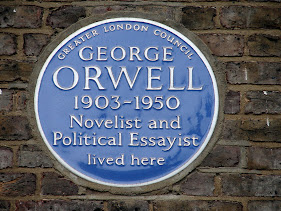
George Orwell and metric units

Image
When I first read Animal Farm, I was too young to understand what it was about. I was completely oblivious to the fact that the book (novella, if you must) was an anti-Stalinist satire. I took it at face value, and thought very little about the actual message — though it did leave me with a permanent craving for bacon. The only thing that really landed for me while still in primary school, was the single law which the seven commandments eventually became. "All Animals Are Equal / But Some Are More Equal Than Others." In addition to being totally unaware of the political context of one of Orwell's finest works, I was also completely unmindful of the units of measurement used. In fact, when I re-read it much later on, it was no surprise to me that all units of measurements were imperial. After all, it was published in 1945. Although metric units were first permitted for use in the UK in 1897, they didn't come into common use until around 70 years later. Four years after...

Showing a bit of kindness to the imperial system

I've been out of the blogging game for a while and I do apologise for that. Quite frankly, there's been little to write about that our friends at the UK Metric Association haven't already covered in their blog. In the world of metres and kilograms, there have really only been two things on my mind. None of them has any immediate impact on getting the UK to be rid of miles and yards on road signs. In fact, neither of them is even getting a mention in this post - you'll have to come back for those. In recent times, my views on the imperial system have softened ever so slightly. For one, I've grown fond of the pint as a unit of measurement for beer. I'm sure this comes as no surprise. In my visits to the US, I often find myself explaining the difference between an imperial pint  and a US customary pint. My fondness however, has not extended to other archaic liquid measurements, and I explain both pints in terms of millilitres and not fluid ounces (568 ml in the UK ...